Friday, July 22, 2016

Opening Up About Being Intersex

Photo By Lynnell Stephani Long
This summer (July 14-17) I attended a conference in Denver, Colorado put on by the AIS-DSD Support Group. This conference offers support and education for people born with intersex conditions- myself included. This was now my fourth conference with AIS-DSD and my second year as a board member to help plan the youth track.

There was once a time when my Intersex condition brought much anxiety and turmoil to my life. By being born with Complete Androgen Insensitivity Syndrome (CAIS), which means I have male (XY) chromosomes but was resistant to androgens during prenatal development and developed as a female. There are certain effects of the condition I had an easier time to cope with than others such as not having my period and I was able to cope with not being able to have my own children most of the time. But the underlying secrecy and shame that comes with being intersex can be difficult to overcome. Most of the anxiety I experienced arose from finding a balance between secrecy and privacy in disclosure to others, dating and disclosure in intimate relationships, and dealing with doctor appointments.

My parents found out I was intersex when I had a hernia when I was an infant. My gonads (under developed testicular tissue) came through and the doctor chose to put them back in until puberty. Many families are told they need to remove the gonads right away once they are discovered because can turn cancerous (which in many cases is putting the cart before the horse). Cancer is a scary word for these families, so they typically comply with the doctors to keep their kids safe because they are scared. I did have cancer as a teenager, but it was unrelated to gonads. When I was twelve, I was diagnosed with Hodgkin's Disease (lymphoma). My gonads were removed during a cancer staging surgery at that time, and I started on estrogen to continue with female development. I was told as a teenager that I have XY (male) chromosomes at one of my doctor appointments, but it got lost in translation with me. No one explained what it meant or said anything about Intersex. I was focused on cancer, chemo, and living my life.

As I entered my 20's and with the help of the internet, I looked up my diagnosis (CAIS) online. By this time I was entering my professional phase in my life, and have graduated with my masters in social work. I have already survived cancer twice, been volunteering with oncology camp, and graduated with my masters in social work. I spent a lot of effort coping on cancer survivorship and it was time to start delving into CAIS. I was quite shocked while searching Complete Androgen Insensitivity Syndrome and finding terms like hermaphrodite, intersex, and medical pictures of lines on people's faces. The most helpful information I found was for a support group and I contacted them right away.

Being apart of the online support group put me in contact with many other people who were born like me! I felt comfort being able to discuss my issues and concerns and ask questions about being intersex within my community. It took a few years after I joined the support group to finally met someone in person, and another few years until I attended one of their conferences. Besides the fact I was committed to volunteering at oncology camp for so many years, I wish I would have gone to one earlier!

My first conference experience was in Boston and it was full of anticipation, excitement, and anxiety. My husband went with me and we made a vacation out of it. One of my immediate observations was that it was difficult to actually pick out who the intersex people were attending the conference. Leo and I were often mistaken as parents of an intersex child, and I would have to point out that we were there for me and it was my first conference. This conference was also the first time I was able to sit down with my peers and share my story from beginning to end with people who have had similar experiences and understand them. That was a powerful experience!


We had a great time at the 2014 AIS-DSD conference in
San Francisco and seeing the city and attractions!
After Boston, I invited my parents to attend the next conference in San Francisco. I felt it was important for them to meet other intersex people and family members! We made a vacation of out it and saw the attractions of the city. I then attended conferences in Cincinnati in 2015 and then Denver in 2016. This time I was on the AIS-DSD Support Group board who works to plan the conference. I was proud to work with such an intelligent and dedicated team who were committed to putting on a supportive, educational, and diverse conference for all who attend.

You may be wondering why am I making a big deal about being intersex? We live in a world of gender reveal cakes and where many people in society are threatened by gender diversity, coupled with a rocky and inconsistent relationship the intersex community has with medical professionals. In short, these instances have perpetuated fear and shame in personal relationships and societal perceptions of intersex. We have become invisible in society. Personally, this has made it difficult for me to discuss intersex within my family, be open about it while dating, or be public about it.


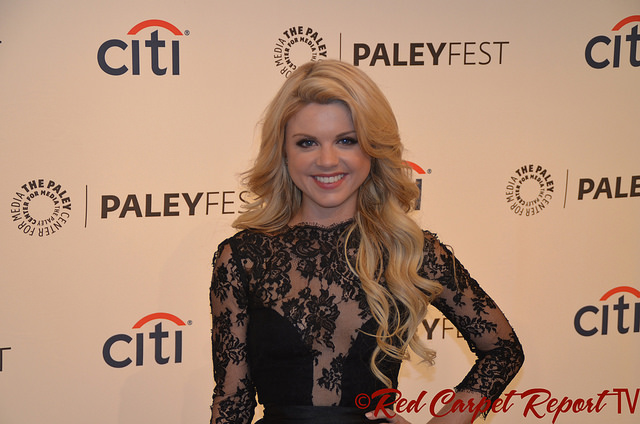
with actress Bailey De Young
from MTV's Faking It.
In recent years the tides have been changing. The intersex community has been growing and gaining more strength within itself and society as a whole. In media, there have been intersex characters integrated in books and even TV shows. Recently, MTV had a show called Faking It where one of the main characters, Lauren, was intersex. The show worked as a team with individuals who are intersex from InterACT to develop the character and authentically represent intersex within the plot. Watching this show and seeing Lauren reveal herself to her friends and how that shaped her relationships was very empowering. I would have loved to have that kind of media representation when I was a teen.


There is still much progress to be done in the awareness and rights of the intersex community. But I have made enough progress to let you all know that I was born Intersex and I am OK with it. Because I was born intersex, I have become part of a wonderful and loving community who supports me. I have made an impact to the intersex community by being on the AIS-DSD board. I got to travel to new cities and make new friends. The benefits have started to outweigh the negatives at this point. I am done letting secrecy and shame hold any space in my thought process and replace it with positive thoughts, love and compassion.


My partner in crime in life
Site seeing after the Denver Conference

I would like to end this by thanking all of my friends who have been there for me at different points of this process, my family for loving me for who I am, and my husband for accepting me for who I am. I appreciate your continued love and support! I wanted to write this blog out of a sense of freedom for myself and education for the general public. Intersex issues are complex, and this was just a small piece of my experiences.


We Are Much More Alike Than We Are Different


AIS-DSD Conference Denver 2016 (photo courtesy of Lynnell Stephani Long)

Sunday, October 25, 2015

Intersex Awareness Day- October 26th


Little Amy, cowgirl phase
When I was a child I loved unicorns. In my room I had unicorn statues, a snow globe, posters, and bedspread. Something drew me to those mythical creatures and their unknown worlds of imagination. As a child I knew unicorns were not real, but as an adult I learned what it felt like to be some what mythical. In the year 2003, I was in my early 20's when I decided to further investigate my medical records and did an internet search for Complete Androgen Insensitivity Syndrome. It was a shocking realization to learn I was born intersex, which technically means although my body is female I also had male chromosomes. During fetal development, instead of progressing into male development, I was resistant to androgens (testosterone) and reversed development into female. I had never heard of this diagnosis or anyone else like me. It was a rather lonely feeling. Up to that point, I had only heard about hermaphrodites and seen the episode of Friends, where they joked about Rachel being one.


Fast forward to today. I now belong to a fantastic support network of intersex individuals and know a lot of people with the exact intersex condition I was born with. That is the most awesome feeling in the world and makes being born with this difference more bearable! Having these connections through the Androgen Insensitivity Syndrome- Differences of Sexual Development (AIS-DSD) support group had increased my confidence to overcome the obstacles of dating, being childless, and insecurities of being born different.

Displaying Intersex Awareness Day 4.png
aisdsd.org
October 26th is Intersex Awareness Day, and some major obstacles the intersex community faces are many people do not know we exist or that we have had our rights infringed on throughout the years. There is a long history of the medical community encouraging our shame by providing gender correction or assigning surgeries to very young children, removing gonadal tissue before a person is old enough to make those decisions and starting kids on hormone replacement therapy so they can develop normally and fit in to what gender they are supposed to be. Today our community is speaking out against these outdated medical practices. There are practitioners who are willing to listen and walk with us to make changes for the future, but this type of change is slow and we hope for positive changes for future generations.

For us to take control of our lives, we need to be apart of the decisions of our medical care. Because we have not been apart of the discussion, it has fed into the shame and secrecy of being intersex and different. But the more intersex people I have met, the more I realized how frequent and it was. We are conditioned in society to think in terms of male and female, pink and blue. But that is not always the case! We are typical human beings, dealt a lousy biological card for something that happened to us during prenatal development. We want to move to move forward from this past of shame and secrecy into a future of being comfortable in our skin and living openly about who we are! 

I know I cannot change my past in terms of what surgeries I had and what information was given to me and when about being Intersex. But I have the power from now on to choose how I want to live my life. I have been blessed to find a partner who married me and loves me for who I am. I have found a rewarding career in social work. I have been blessed to become a leader in my intersex community and assist in planning our support group conference and the youth. Working with the youth had given me much hope for the future, seeing their strength and courage to be who they are at a much earlier age without hesitations.

Meeting actress Bailey De Young who plays intersex character,
Lauren on MTV's show 'Faking It"


Intersex is strange and different for people who don't understand it. But most people do not understand it because we are afraid to be open and public about who we are due to negative push back. But the more aware the general public becomes about our existence, they learn we are not unicorns but real human beings. Also, we want to be respected in our medical decisions and have involvement in the research process- not be studied! We want to live life free from shame and secrecy and to not be afraid of being who we are and true to ourselves.

2015conf
Support group members, family members, and allies at attending the 2015
conference. So happy to be together, supporting each other!
Courtesy of aisdsd.org 

Thursday, August 27, 2015

Creating a secular adoption

https://www.flickr.com/photos/gabi_menashe/218574269/sizes/o/

After I was diagnosed with stomach cancer in may 2016, our hopes for adoption have been put on hold. You have to be cancer free to quality for domestic infant adoption.

Adoption is used as a way to build families for a variety of reasons. But what happens if you are a secular and looking to adopt? When you do an online search for adoption for secular families or atheists you may as well see a blank screen. Since many adoption agencies arose out of religious institutions, there are not a lot of obvious resources in the adoption realm for secular families. Don't let this discourage! If adoption is something you are considering as a secular family or individual, it is possible. There may be a few extra things to think about before going into the process.

A couple of months ago, my husband and I completed our home study process through our adoption agency. We are now waiting to be matched with a birth mother with our adoption agency. When we started the process, we chose domestic infant adoption and found a local agency that has a faith based background but also works with secular families and we would feel comfortable would not discriminate against our non-religious status. I have read online stories of people who were encouraged to hide their secular views and pretend they were involved in a the church in order to adopt. Our experience was such that we did not have to hide our secular views and we were able to be ourselves.

When I was working on our profile book for birth mothers to look at with our agency I went online to look at examples of other couples. There was some diversity out there, but I was starting to feel like a minority! Many other couples expressed faith and a belief in God as well as offering "christian values" as a benefit to handing over a child to them. I know not all birth mothers are looking for a family that has faith based in religion to raise their child-they are looking for a family who will love the child in their absence. I know what our family has a lot to offer a child without religion, including a loving home, good education and by golly some critical thinking skills. We did not disclose in our profile book we are a secular family or atheists, but the lack of acknowledging faith and religion makes it obvious.

When you are starting the process it can be difficult to find specific answers to questions about adoption because it all depends on where you live, what type of adoption you are doing, and what regulations and procedures they have. I am an educated social worker, and it was very confusing to me!  Initially I found a website for our state that guided me to our agency we chose. From that point, our social worker is the main person we have a working relationship in the process. We have had an excellent relationship with our social worker, but this person can make or break your success in the home study. The social worker is bound to ethical standards and organizational policies, but they are also human beings.

The overall process for adoption can be a lengthy one. For our choice of domestic infant adoption one of the qualifications in our state is that we are married for at least three years. After we met that qualification, we were then put on a waiting list. Once we got to the top of the waiting list we started the "home study" that includes, an application, reference letters, physicals, a letter from my oncologist stating I was healthy (because I am a childhood cancer survivor), a mental health exam, FBI fingerprints, meetings with the social worker, a home visit, payments, and a profile book. This took about another year and a half from being on the first waiting list until finally being approved. Once we were approved to adopt, we continue to wait until the agency matches us with a birth mother through our agency.

Adoption is a long process that can have restrictions,
but being secular doesn't have to be one!

https://www.flickr.com/photos/44444/294711029/sizes/l

If you are considering adoption and are secular/atheist there are a few things you can think about before starting the process:

1) It is important to know what type of adoption you are open to (domestic, international, open, closed, with an agency or private). This will help guide who you will be working with. This includes knowing what attributes you would consider for a child you are looking to build your family with (gender, age range, race). The agency you work with will ask you these questions- ours did!

3) Consider foster care. The foster care system has fewer restrictions (age, marriage and thus more open to a variety of family backgrounds. This is a great opportunity to become a forever family for older children as well.

4) Reach out for support locally and online. I joined a Facebook group for secular foster and adoptive parents, which was comforting to know I could ask questions or vent if needed. It is nice to know there is a group of people out there if needed.

5) Continue with your life as usual. A lot of adoption is waiting. Please do yourself a favor and continue with your work and hobbies as usual. We went on long bike rides across our state, competed in triathlons, even left the country knowing very well we could have gotten a phone call from the social worker saying they had a baby for us. We know what room we would have for a nursery, but haven't set one up yet. If you spend all of your time focused and thinking about adoption and the process, that may lead to sadness and depression when the process can take a while.

Obviously since our adoption story is not complete, I cannot say we have had a successful secular adoption. But I am confident it is only a matter of time before we are matched with a birth mother, and when we do, we can be confident we were true to ourselves and our story. Thankfully, we live in an area that had good resources to meet our needs. I know that not everyone will have the same opportunities we have had, and this is where networking and social media can help. You can cast a wide net by making an online profile and searching for a private adoption, you can even go across state lines if needed. Overall, the adoption plans start with the wishes from the couple or individual who are seeking to adopt, and but it is helpful to know that adoption for secular families has become increasing attainable!

Tuesday, January 27, 2015

Intersex In The Media

Last summer at CONvergence/SkepchickCon, I attended a break out session called “Not Men or Women: Everyone Else in Fiction.” The panel members explored the gender binary and ways to incorporate these types of characters mostly into fiction writing. Being intersexed, I was enthused to attend this panel to learn more about the subject. What I found was a room full of people interested in using characters in their writing that fell out to the gender norm and they wanted to do it right. Little did I know that in the months to come there would be more use and awareness of intersexed characters in the media.
The first major news was that the MTV network introduced one of the characters in their teen drama Faking It as being born with Complete Androgen Insensitivity Syndrome (CAIS). The exciting thing for the intersexed community was that MTV approached Kimberly Zieselman for consultation on the show, who is the executive director of Advocates for Informed Choice (AIC)—a legal advocacy group for those with differences of sexual development. They also collaborated with some of the youth who work with AIC to do educational pieces in social media to explain what Intersex was after started introducing it on the show. The producers of Faking It wanted to develop this part of the character right. They collaborated with Kimberly to learn what it was actually like to be born with CAIS, and how it affects our lives.
I have been watching Faking It (mostly on Hulu, as I get behind on my shows) and would highly recommend it. This is the second season of the show, so I was a bit unsure about hopping into a teen drama on MTV, since, obviously, I am not the target demographic. The premise of the show is that two teen girls (Karma and Amy, who are best friends), went along with an assumption they were a lesbian couple because it helped them gain popularity and social status in their school. It wasn’t long before the truth came out, but Amy ended up questioning her sexuality and remained in love with her best friend, Karma. The more I watched it, the more I gave them credit for putting gender issues out there, despite some of the dramatic quirks in the plot.
bailey de young
Bailey De Young, Plays Intersex character, Lauren, on MTV’s show Faking It (source)
Early this fall, I was able to get an advanced copy of a book called Male, Female, or None of the Above, written by I.W. Gregorio, who is a practicing surgeon in urology. During her residency, she encountered a young woman who was intersexed. This encounter inspired Gregorio to write her book and become a part of a movement to create more diverse books.
The main character in the book is an 18-year-old high school student named Kristen who learned she was intersexed after attempting to have sex with her boyfriend. Her life unraveled in the worst way after she confided her diagnosis to her closest friends, something many of us who are intersexed fear would happen after outing ourselves. She as bullied by peers at school, her boyfriend dumped her, and it was clear most people in her life didn’t understand what being intersex was. She makes some rash decisions about social situations and medical care, which she has to learn to cope with.
book: none of the above
Used with permission from the author (source)
When I was learning about my diagnosis, I would have loved to have a book like this to read to help normalize my feelings and situation even if I did not encounter the same situations. One of the recurring themes in the book was that Kristen would always describe herself as a hermaphrodite when she was trying to describe her condition to her peers. But for many in the intersex community, the term “hermaphrodite” has a negative connotation and we are attempting to move away from it. Despite that part, I still think the book has a great message, especially if you are curious what life is like for some people with intersexed conditions. It will be available to the general public in April 2015.
The last exposure of intersex in the media occurred when Taylor Lianne Chandler publically announced her alleged relationship with Olympic gold medalist, Michael Phelps. Taylor also made it known she was born intersexed. She had her fair share of supporters, but she fell under attack because of the lack of proof of her relationship with Michael Phelps and the sensationalization behind her story. There was major skepticism about whether Taylor was actually telling the truth about having a relationship with Phelps or if she was doing it to increase a media buzz for herself, but then people also tied that skepticism about her relationship to believing that she was not intersex but rather transgendered. Since there is still ignorance in our society of what intersex means, Taylor was subjected to a harsh backlash directed to her because of how she was born.
phelps and chandler
There have been no photographs released of Chandler and Phelps together (source)
Taylor’s publicity made many people in the intersex community uncomfortable because of her approach. But it also started a conversation about how the intersex and transgender communities need to increase support of each other since we are both dealing with sensitive and common issues. Sometimes people confuse the two because being born biologically between the sexes, and being born male or female and desire to transition to the opposite sex.
These three occurrences of intersex in the media in 2014 demonstrate how there has been an increase of awareness of intersex conditions in our society. In many ways it is great to have the general public know more about intersex conditions, but not without some growing pains. The media presence, especially the story about Taylor Chandler, made some people in our community uncomfortable because of how it was demonstrated or sensationalized. We cannot control all aspects of the media, but we can control our actions to it and use it for opportunities to increase education for what intersex really means. If you are also one of those authors who are considering integrating intersex characters into your writing, I would encourage you to do so. I would also encourage you to first do your homework to understand what it means to identify as intersex.

Sunday, November 30, 2014

Letting Go of My Religion

Dear God, I have changed my mind. After being baptized and brought up Lutheran, I have decided as an adult to stop attending church and leave you behind. When I was young, I made active choices to be more involved with my church since my parents did not attend church regularly. I participated in youth group activities such as confirmation, retreats, camps and big youth gatherings. I attended a Lutheran college, and sang in choir in my church as an adult. I had mostly positive influences in my life because of my church. So the big question would be why would I leave all of that behind, especially the promise of an afterlife?

I mentally took the plunge into atheism a couple of years after I married my husband who is an atheist.  Looking back, I am not sure if I truly believed all of the teachings and followings of the church I was brought up in. When I was young my life wasn’t all that easy. For starters, I grew up with an alcoholic father. My dad was a good man when he wasn’t drinking, but it seemed like the parents who attended my church with the kids my age knew what family was about and loved their kids the way I wanted to be loved. I was envious of their connection of both family and the Holy Spirit. Then came my cancer diagnosis.

It’s amazing how alone and distraught you can feel when you are diagnosed with cancer. My church was about the only place I could go and not feel so isolated.  The people there made it known they were thinking of me and were there to support me and also pray for me. It was heartwarming when most other areas of my life I was surrounded by kids who didn’t understand and adults who didn’t talk to me because they didn’t know what to say. But since I had such a life changing experience so early in life, it allowed me to consider the meanings of life, death and religions, and I took classes on the subjects in high school and college whenever I could.

My biggest tipping point against religion would be coming to terms with being born intersexed (a female with male chromosomes). Despite learning from an early age that I would not be getting my period and not be able to have children of my own, I didn’t have a full understanding of what my diagnosis was until my mid-twenties. Coping with the diagnosis was very isolating, but it was also confusing as to how being born intersexed fell into religion and the eyes of God.

I would say I had never been 100% convinced about religion. I felt awkward when I prayed on my own. Unless I was reciting a poetic group prayer, the thoughts and words never flowed as eloquently as I thought they should. I have so many unanswered questions when it comes to religion. I was always confused about how there could be so many religions in the world, and questioned which one was right. Were the millions of other people who followed their religion and God/gods wrong and going to hell for their beliefs?  I wondered how God could have created the world, and yet there was the theory of evolution. There were inconsistencies I personally felt in my own religion, that women could be pastors in one synod but not another. I was also angry at God about why innocent children with cancer ended up dying from their disease, and there are also the atrocities of the church such as the catholic priests molesting innocent children.

The personal issues I held with God were a combination of all my life burdens that I often felt were too much to bear at times. But one subject that continued to haunt me were my questions about death. If I do not follow religion, what is going to happen to me if I die? It was a scary thought to consider, but it wasn’t enough for me to continue to stay in my religion. I started to consider that death was a big issue for many people who are religious, and God and eternal salvation was a perfect solution to their problem. Death continues to be a terrible and sad issue for us as humans, but at least religion promises an afterlife, even a way to meet up with long-gone relatives. With all things considered, I couldn’t see how gambling on a promise of an afterlife would be enough for me to continue to believe in God and stay with the church.

The church I once held in high esteem started to fall in shambles because of my questions. But I wasn’t so quick to let go of the years of dedication and service to God I had put in. How does one just let go of a promise of eternal love and a spot in heaven? Not to mention the Christian faith has it set up that if you are not working with them, you are against them. You are working as the hands of the devil and going to hell, and no Christian wants that! I promise you that you can still be a good person without religious guidance. I continue to have the same morals I have as a human being, even without divine guidance.


It wasn’t until I met my husband who is an atheist who showed me that it was OK to continue to question the existence of God and the validity of religions. It can be a slow process to leave your religion as you are often connected and intertwined into your thinking, beliefs, and social interactions. There are many people out there just like me who have found more questions than answers when it comes to religion and faith in a higher power. But above all, you must have faith in yourself and your knowledge and instincts that you can live your life without it, and you are going to be OK.

Thursday, November 6, 2014

Insignt Into the Lives of the Intersexed


There are some things about being intersexed straight gendered people wouldn’t fully understand because they will never have these particular combinations of experiences themselves. I am going to provide a little insight into our world, to give some understanding of what intersexed people experience including some internal feelings and the interactions with the people in our lives. Although there are several intersexed disorders of sexual development that affect people, my perspective in this article is coming from an intersexed female born with Complete Androgen Insensitivity Syndrome.
Frequently we start our journey feeling alone and scared.  If we were diagnosed intersexed as a young child, many of us are unaware of our diagnosis until our families’ feel we needed to know.  Most of us learn of our diagnosis around the time we were supposed to start puberty because we were not going to get our period. Some of us were not diagnosed until after our friends reached puberty because we did not get our period like our peers did, and went to the doctor to find out why. Learning this information about yourself is shocking, because you automatically find out you are different and assume this difference is a negative thing. The information about our diagnosis is something we keep a secret as a way to protect ourselves. We don’t even talk about it, even with our loved ones and closest friends, because if this information gets into the wrong hands we can be ostracized for something we have no control over.

An identity crisis can arise because the person you once were is now all up for questioning, even if you were confident in yourself before. If they dreamed about getting married and getting pregnant with a partner, this dream may be shattered once they learn they have no uterus. Not to mention the perplexities of finding yourself outside of the gender norm.  Each individual person has to decide for themselves what being intersex means to them.  Do I feel male or female, or want to be categorized in between?  Am I gay or straight?  If I have male chromosomes and I am in love with a male, does that make me gay?  These are all valid questions that can be resolved over time.

Counseling would be helpful to work through issues such as these, but it isn’t always offered directly. We find out quickly we have to advocate for ourselves and we also have to advocate for ourselves in working with our doctors. Many doctors are not specialist in working with intersexed. Some do their best with examinations and hormone replacement therapy, but some doctors are still uninformed and quite ignorant in our care. We are often put in a place of outing ourselves to nurses and residents every time we step into a doctor’s office when we are asked “when was the last time you had your period?”

As years go by we get reminded time and again about our differences. Sometimes it’s the small daily reminders like when we wake up and take our estrogen pill. Other times we get reminded when friends or roommates commiserate about getting their period, invites to baby showers or attempting to start intimate relationships. Dating is hard enough for straight gendered people so imagine if you felt you had a secret to divulge, hoping the person you liked would stick around after you tell them. Some of us never overcome this obstacle because it’s scary as hell. Many of us have delayed dating until we gained confidence in ourselves again.  But what if we had this confidence at an earlier age?
We also have to become educated about our diagnosis so when we do need discuss it with other people we know what we are talking about. It is a learning process, and a lot of people in the general public do not understand right away what you are talking about, so we also have to be prepared to give them resources to go back to later. Thanks to the internet, recent generations of intersexed people were able to educate themselves about their diagnosis online and more frequently become attached to resources and support because of it.

Connecting with a support group can be a turning point for us. Instead of feeling isolated and scared, we can now reach out to each other and recognize we are not the only ones we know who were born this way. The dreams that were once shattered after the diagnosis can now slowly get pieced back together again.  We can see other intersexed people have maintained loving relationships, even built families through adoption. What once was our secretive story to agonize over is repeated again by other intersexed people as their experience until it becomes normalized and life becomes more hopeful. The most exciting and overwhelming experience can come when you actually meet another person who was born just like you!

With all of these supports in mind, we would like to partner with the doctors, social workers, psychologists, who are treating the newly diagnosed and their families so we can offer them the education and support they need right away. We shouldn’t expect them to have sought out these resources on their own because it only assumes families will take action to find resources and not fall through the cracks. Some doctors may be reluctant to having us there as a resource for families, but we know from personal experience that early support and intervention is key for the intersexed person to getting to a happy place in their life. Not everyone is born into a supportive network, and our community believes if we have an early intervention and the opportunity to support the intersexed person and their family, it can resolve some of the negative aspects of the diagnosis earlier.

Life as an intersexed person isn’t always easy, but with the right support we can live full lives and flourish. Many of us are well educated, have supportive families, and have started families of our own through adoption. If you happen to personally know one of us, you may even forget about our diagnosis and just treat us like regular people, because that is exactly what we are- human beings.  We are human beings who have overcome remarkable hurdles just because we were born outside the gender norm.
http://skepchick.org/2014/09/guest-post-insight-into-the-lives-of-the-intersexed/

Invisible Intersex

Do you know someone who is intersexed? Would you be able to notice a person is intersexed by looking at them? The answer to that question is no. It is estimated that 1 out of 2,000 babies are born with a difference of sexual development (DSD), so it’s more common than most people would think. So where are all of the intersexed people? We are here and slowly gaining the courage to open up about it.

I, myself, was born with an intersexed condition called Complete Androgen Insensitivity Syndrome (CAIS). I have male (XY) chromosomes, but during prenatal development did not respond to androgens (male hormones) and instead developed female genitalia. I look like a normal woman, but do not have a uterus or ovaries. My parents found out I was intersexed because I had a hernia when I was about a month old from underdeveloped testicular tissue or gonads. The doctor repaired my hernia and left the gonads in place until my teen years.

My parents were as supportive as they could be under the circumstances. They tried to prepare me for what was to come, and told me that before my friends were going into puberty that I was not going to get my period or be able to have children of my own, but I would also have to have a surgery. I had the surgery to remove my gonads when I was 12 years old and started to take estrogen hormone replacement therapy to ensure development as a woman would successful. There was no education or counseling session with professionals to tell me what was going on or why the surgery needed to take place.  I remember someone telling me in high school I had XY chromosomes, but that did not make sense to me at that time. fter the surgery was over, I spent several years knowing I was different than the other girls, but not understanding why or questioning it.
Fear and anxiety about my difference built up over the years because no one talked openly to me about it. I continued to see an endocrinologist on a regular basis for check-ups and hormone replacement therapy, but it wasn’t until my mid-twenties when my curiosity got the best of me. I went online and searched for the diagnosis I saw in my medical charts “Complete Androgen Insensitivity Syndrome”. I saw terms like “male chromosomes”, “testicular feminization”, “hermaphrodite”, and rumored celebrities who were also born that way. It was a huge shock to say the least! A positive thing about searching the internet for CAIS was coming across a support group, where I learned I wasn’t alone and eventually met other people born intersexed. I also started to have open conversations with my parents about being born intersexed and how it has affected my life.
Around my 30th birthday, I was reaching more than one milestone. I had a feeling I was coasting through life not being my whole self. I wanted to be more open and honest with my family and friends about whom I was as a person. This secret also kept me from having a fulfilling dating and sex life. I started to open up to my closest friends, educating them about how I was born. I disclosed to my best friend over email, because I was too anxious to do it over the phone. All of my friends responded positively, and wished they would have known earlier so they could be there for me.

With this confidence, I decided to put myself out there in the dating world with the help of online dating. I met this younger, athletic, smart guy who then became my boyfriend. We spent several months getting to know each other and I confided to him I wasn’t able to have children, and he accepted that.  Then one spectacular day, while on vacation in LA, he proposed! After happily accepting his proposal, there was a dread that crept up. I hadn’t disclosed to him about being intersexed yet! A month went by before I told him the truth. He ingested the information, and stuck around to say “I do”, and one day we will build our family together through adoption.
Instead of feeling guilty about not telling my husband I am intersexed before he proposed, I later realized I wasn’t ready to tell him and am glad he accepted me for who I was after I did. Most people who are intersexed have a fear of being rejected for telling the truth about who we really are. The fear stems from the secrecy of our diagnosis, surgeries, and sometimes even gender assignments! We are told that you can continue to live your life as a “woman” with this condition if you have this surgery and take these hormones, but you just won’t have your period or be able to have your own babies. Like life will just play out that way and be fine?

But life is not that simple. As we have seen with the gay rights movement, we cannot hide who we are because it will eventually come to the surface. But our society wants to categorize gender into “male” or “female” and not deal with the “other” category that already exists. Intersex is a paradox some people have attempted to hide under the rug, and it has worked so far. As a human being we deserve the right to live life as we are- without being ashamed if we do not fit into the typical roles of society. The real truth is if we have truth, compassion, support, and love in our lives we can feel pretty damn good about ourselves.
My story is similar to many others who were born with Complete Androgen Insensitive Syndrome. There also are several other diagnoses besides CAIS that qualify as Intersex. And we have not always been treated well in the past, especially from the medical community. I have heard personal testimonies of people who were photographed nude, coaxed into surgeries, and assigned a gender that did not fit who they were. Years past, the medical community wanted to provide a quick fix and keep our lives under wraps, which is where our invisibility began. Although it is progressively getting better, some of these injustices are still occurring.

The future of the intersexed community is gaining strength, and with that strength the confidence to be open with the world around us. I have been blessed to join a network of support who is working on education, advocacy, research, and awareness to the general public and medical community. The AIS-DSD support group is focused on being a positive resource for intersexed people, their families, and a broker with those who want to work with us on research studies. We have made positive strides, but we still need to work on prejudices such as people who are afraid of our differences, unconformity, and even religious discussions about human evolution and how we fit into religion.

Thursday, May 15, 2014

I would like to buy a vowel! #intersexawareness

Most people in our society understand the acronym LGBT and what it relates to (Lesbian, Gay, Bisexual, and Transgender).  But is it missing something?  What about Intersex?  I would like to propose adding an "I" to LGBT.  This is not a new idea, and some organizations have already been going there, so KUDOS to them!  But as I had discussed before, the Intersex community are often 1) misunderstood, 2) under represented for various reasons.

The most inclusive acronym is LGBTQIA.  The website for the Tahoe Safe Alliance did an excellent job breaking it down.  At this point in time, when I did a internet search for LGBTQIA, a lot of them were for student groups or raising awareness at university.  But we need a overall society awareness of inclusion.  Here is what the Tahoe Safe Alliance has listed for what LGBTQIA means:

Lesbian – A female- identified person who is attracted romantically, physically, or emotionally to another female-identified person.
Gay – A male-identified person who is attracted romantically, physically, or emotionally to another male-identified person.
Bisexual – A person who is attracted romantically, physically, or emotionally to both men and women.
Transgender – A person who is a member of a gender other than that expected based on anatomical sex.
Queer – An umbrella term which embraces a variety of sexual preferences, orientations, and habits of those who do not adhere to the heterosexual and cisgender majority. The term queer includes, but is not exclusive to lesbians, gay men, bisexuals, transpeople, and intersex persons, traditionally, this term is derogatory and hurtful, however, many people who do not adhere to sexual and/or gender norms use it to self-identify in a positive way.
Intersex – Someone who’s physical sex characteristics are not categorized as exclusively male or exclusively female.
Asexual – A person who is not attracted to anyone, or a person who does not have a sexual orientation.
Ally – A person who does not identify as LGBTQIA, but supports the rights and safety of those who do
http://tahoesafealliance.org/for-lgbqtia/what-does-lgbtqia-mean/

So in the future lets work together to be more inclusive and use LGBTQIA.  I know it's a mouthful, but it will be helpful to make sure everyone is included and supported, but also raise awareness to the intersexed community.

Saturday, May 10, 2014

Home Improvement Update WITH Pics

Who knew that weeks later our kitchen would still not be finished?  The project sounded so simple, but once the spring started to warm up, our priorities turned outside to the garden during the weekend hours.  The Hubby worked on getting compost and planting our starter plants.  We pretty much only need to put the cabinet doors back on, and do some detail painting to finish the project, but I am ready for it to be done!

The reason for the madness!  The Original Tiles
Getting ready for some fun!


The wrong wall paint color :*(


Picking out the New Green!
Temporary Kitchen

Going with Go Fish!
New Paint Color
Bailey tried to help paint!


Gardening instead of working on the Kitchen!

Tuesday, April 29, 2014

Home Improvements

A few weeks ago I noticed a piece of the linoleum kitchen floor coming up.  Then while happily shopping for new floor tiles at the local home improvement store, my husband informed me that we would have to move the refrigerator and stove.  My response to this was sarcasm of course.  I said "Well, why don't we just install new kitchen cabinets while we are at it"!  Well, knowing that wasn't in the budget, I suggested painting the cabinets and walls in the kitchen since we had to move all of the appliances.  We decided to take an extended weekend to put it all together.

Home improvements always take longer than expected.  It is fun to decide what tile to put on the floor and paint to put on the wall, but actually doing it is a whole different ballpark.  If you are going to work on a home improvement project, along with the paint brushes, tape, etc., you will need patience, a sense of humor, and a good side-kick!

We started to paint the cabinets and put a coat of paint on the walls.  The next day, we pulled up the floor and put the new floor down.  After the floor was put down, we realized the wall color didn't work and needed to pick a different color green!  The days eventually blur together and it's been a week since we started the project, but we are getting close to being done and it is all coming together!

Thursday, April 24, 2014

Intersex in the News...

http://live.huffingtonpost.com/r/segment/raising-an-intersex-child/53456b7378c90a2ff90001bb

So there was an awesome piece done with the Huffington Post Live on raising an intersex child earlier this week.  There were a couple of people in the interview I was able to meet in person at last year's AIS-DSD conference.  They did a fantastic job articulating the needs of what intersex children.  This segment is another positive step for us intersex people to gain recognition in society.  Please watch and learn, and spread the good word!

Adoption, the waiting game

My husband and I have now been on a waiting list for domestic infant adoption for six months now.  We had discussed adoption a few years ago, and did research on what agency in the area we would want to work with.  After doing the research and initially contacting them, we had learned that for domestic infant adoption we needed to be married for at least 3 years, and then we get put on their first waiting list.  And then when our names get to the top of that list, then we can start the real adoption process of home study, etc.

So far, six months have passed and we hadn't been contacted.  I emailed to make sure they got all of the initial paperwork because we didn't get a phone call or email from them to confirm they did get it.  I had to get a letter from my oncologist saying that I was healthy to adopt a child, because of being a cancer survivor.  I was somewhat anxious to make sure they got all of the paperwork.

So now all we can do is wait.  We are not in a huge hurry to adopt because we would like to make sure our finances were in order before paying for all of that, but I would like to be somewhat younger while being a mom.  The challenge right now comes from using patience.  I am used to being patient, but most situations in my life also gave me the option of doing something proactive towards a goal.

As soon as we are contacted and start the process, I plan to document how things go.  I am curious to know a few things, but the answers will reveal themselves in time.  Questions like "will being born intersexed be brought up or become an issue?  What about being non-religious family?  I just hope that our strengths as a couple shine through, that we love each other and would really provide a solid and loving home for a child.

Saturday, January 4, 2014

2013 Year in Review

Dressed up for Wedding
Happy New Year!  It is a few days into 2014, and we have all made it through the holidays.  This year in Iowa it has been a cold winter.  Since I have been holding up indoors, I have taken time to reflect about things I have learned about myself in the previous year.  This past year doesn't seem like a spectacular one at first glance.  The day to day of life sometimes  takes the awe out of things.  I am the first to admit I sell myself short on my achievements (something I am working on).  Here are some of my highlights of 2013:

In the spring, I agreed to participate in a dance for an Indian wedding celebration for the gathering of the family and friends the night before the wedding.  Our little group represent the friends of the bride from our area.  We met for weeks to learn choreographed dance routines we performed for the bride and groom to be!  I truly enjoyed spending time with the women I danced with, learning the routines, and being apart of their wedding in a small way.  It was a joyous occasion!

Happy to be done with the Pigman!
I started the summer off with finishing a tremendously windy sprint triathlon.  I completed this triathlon before in agreeable weather conditions.  I am a slow triathlete, so my goal is usually to not drown and just finish.  My goal for the 2013 Pigman Sprint was to finish and beat my time from the previous year, but with the weather conditions my goal changed to being "just to finish!"  I was focused on the bike portion of the triathlon just to keep moving, even when it seemed like the wind was making me go backwards.  I was proud of myself for sticking to it, and finishing before some of my "competition".

Another awesome experience for the year was attending the AIS-DSD conference in Boston, MA.  I wrote up my blog post about attending the conference.  But I cannot express how I benefited from going to the conference, and how it helped build me into a stronger person.  I totally plan on going to the one next year that is going to be in San Francisco and want my mother to go along with me this time.

Some harder lessons were learned when I went on a trip to South and North Dakota and had signed up to do a triathlon on the way to visit the in-laws.  The swim portion was significantly longer than I had done in the past, and after my first triathlon was finished in June, I had not continued with training to prepare myself for this one.  My husband and I arrived to South Dakota and were preparing for it, we arose that morning and as I was surveying the swim portion and surroundings, I backed out of it at the very last second.  The start horn went off and I couldn't get in the water.  I was unprepared and afraid.  It is OK to back out of things, but it's OK to say no earlier than at the starting gate.

Later in the fall, I took the reigns at works while my supervisor was out recovering from surgery.  I attempted to do the best I could being in charge at work.  Until I got sick with a really bad cold!  It's difficult being in charge of housing cancer patients when you are also sick.  You have to take care of yourself, and make sure things are still going on as they should at work- without exposing the patients to your sickness.  I had some excellent coverage with the staff, so I could hide in my office and do administrative things.  Once I lost my voice, I stayed home for a day and a half to rest.  Also, I had to examine my role as a leader at work when one of my volunteers asked me to answer questions for a paper she was writing on leadership.  It turns out, as a self-conscience, over weight, intersexed cancer survivor I had a hard time seeing myself seeking out a leadership position.  As a social worker, I wanted to work with cancer patients and their families- which had led me to where I am today.  But now that I am in my role at work, I truly am loving it as the past couple of years have gone by.

The last major positive step for our family was filling out an adoption registration form.  It is the very beginning phases of a process that can take a couple or few years, but as soon as we me the qualifications of being married for 3 years for domestic infant adoption we sent in the form!  I will use this blog to update on the status of this process as well in its various phases.

2013 was a year full of ups and downs, but this is to be expected.  Overall I am happy with the year gone by and feel blessed for the experiences I had and the people in my life.  I am also working on my dedication to this blog I had started.  It was easy to talk about the story of my past, but once I got passed that it was difficult to continue with topics and formatting.  So, I will continue with writing and see where it takes me.  It will be a mixture of  things about my life as I move forward with it.
all Smiles in North Dakota!

Sunday, November 24, 2013

My First Conference

Ever since I joined the Androgen Insensitivity Syndrome support group, I knew there was an annual support conference they held.   I was finally able to make the conference this past summer, which was held in Boston.  I was excited to go to the conference for many reasons.  First of all, I have been communicating and receiving support online for close to ten years, Boston was a city I have always wanted to check out, and my husband was going with me and we were making a vacation out of it!

Getting to Boston and taking off work was one thing.  The people who know of my AIS diagnosis knew about the conference and my excitement for it, but others just knew I was going on vacation to Boston, but didn't really know why.  I knew that I was finally going to meet many other affected women with AIS.  Up to this point, I had only met one other person in real life and participated in the online community.

Once I got to Boston, my husband and I had some time to settle in and take in some sites.  I love the city, and get quite jealous of people that get to take the metro to work.  As the conference grew closer, I was ready to learn and get involved.  I had a few other attendees warn me about taking breaks and taking care of myself if I felt overwhelmed or exhausted by the experience, but knowing myself and with my social work background I knew that I was at a good place to monitor if I was having those thoughts.

I attended sessions about feeling different, discussing fertility options, mental health resources, and most importantly- sharing your story.  I was finally in a place where I could openly share my story from start to finish and listen to the story of others.  I was in a room full of women nodding my head and thinking "you sound just like me!"  It was an amazing feeling to bond and unite together in such a setting!  I also got a kick out of seeing the youth who attended the conference, and noticing through the education, support, openness with their families about being born intersexed, they seem much more confident than I ever did at their ages.  I hope they continue with that attitude.

Intersexed advocacy was a hot topic at the conference, and starting with bringing our stories to the public.  We are silent in the population, because there is fear and shame behind gender ambiguity.  Some amazing people have started to share their stories online on a website called the interface project- http://www.interfaceproject.org/.  We want to increase education and awareness in the general public for what it means to be intersexed and make sure we maintain our rights as human beings.

The most fun times were when we got to hang out and socialize and just get to know each other.  We all have this major thing in common, but we are all so different with our personal lives, where we live, our hobbies.  WE ARE SUCH INTERESTING PEOPLE!  It's a wonderful thing to have this conference to bring us together- too bad it's only once a year!

Finally, I had mixed feelings about having my husband with me.  I knew I was going to have a different experience at the conference alone or with a friend who was born intersex.  He participated in his own sessions and did his own thing at times.  Some of the other parents saw him as a role model of someone who accepted his intersexed wife for who she was, giving them hope for their daughters (which was cool, but every relationship experience is different).  Overall, I am glad he went because we got to have some discussions as a couple that validated our marriage and feelings to one another.

I left the conference feeling validated and empowered.  I have grown as a person and as a couple.  I plan to go to more in the future, starting with San Francisco and hopefully bringing my mother with me.

Leo and I After Finishing a really HOT Boston 5k

Saturday, October 26, 2013

Happy Intersexed Awareness Day!


I have joked in recent years that October is the "month of Amy" as it starts off with my birthday and ends with my remission day.  My remission day is when I had my last chemo and I was set free from cancer treatment.  But then I got married in October.  But also October hold Intersex Awareness Day, which is the 26th!  So many reasons why this is my favorite month and to celebrate- besides pumpkin spiced lattes!!

No, I didn't get any presents today or anything special for being born intersexed (the day isn't over yet!)  But I would like to talk a little about why this day is so important.  We as intersexed people have a voice.  Many of us are afraid to use it.  Our voices have been stifled since we were born and our parents and those who love us very much were afraid of how society would view their babies that were born differently.  Things have started to get better, but there is still stigma and many intersexed people still feel like they cannot be themselves and compartmentalize how open they are with friends, family, and others in their lives.

Our community is also trying to increase advocacy with medical issues so we can have more control over our bodies.  One big example is people born with variations of sexual anatomy should be able to choose what they want to be and not have it assigned to them.  Another issue is having medical staff willing to work and try different hormone options.

The last reason why a day such as today is important is that many people don't know we are out there or even think twice about us.  We are a secret part of the population that you can hear in statistics or in theory, but many people have never put a name or a face to it.  We are out here.  We exist, and there are quite a few of us.  We have rights.  We continue to grow more stronger and more confident each day.

Sunday, October 13, 2013

Finding Love

October 9th, 2010 was a day for many years I thought would never happen.  I got married to my husband, Leo!  We met through an online dating site, and I wasn't sure if we were going to be a good fit because he is younger than me and because of his "non" religious status.  But there was something intriguing about him and I wanted to get to know him better.  It wasn't love at first site, and Leo wasn't even sure if he was attracted to me at first (as I recall).  But the more time we spent with each other, the more we wanted to be with each other.


After dating for about five months, Leo proposed to me in the gardens in the Getty Museum while on vacation in Los Angeles.  I said "YES", and it was perfect!  There was only one problem...I hadn't told him about being intersexed yet!   Everything I knew about him up to that point led me to believe he had accepted me for who I was.  I told him about being a cancer survivor and not being able to have children of my own, and he was already on board with adopting someday.  But from fear and stigma I was not up front right away about being intersexed with him, which is something I deeply regretted!

I finally divulged my secret to him late one night while lying in bed.  I worked up anxiety about telling him and was having a hard time getting to sleep.  So I knew a long sleepless night was going to be ahead of me if I didn't say something!

The fear of telling someone I loved I am interesexed, and how they may react kept me from getting close to someone for so many years.  I have finally put myself in the position to overcome these obstacles and push beyond my comfort levels.  But being in a relationship and eventually getting married were things I truly wanted, and I am glad I took the risk even though I wish I had handled some of the things differently.  I also recognize that I had a positive experience, and an grateful my husband accepted me for who I was.

I wish there were more men out there like my husband, as regular and humble as he is.  He is also open-minded and a self-proclaimed feminist  Together we make a great team.  Together I am free to be myself, openly and even loved for just being me.